Social Media Image Guides
Prepare images for each network's sizes, crops, and compression.
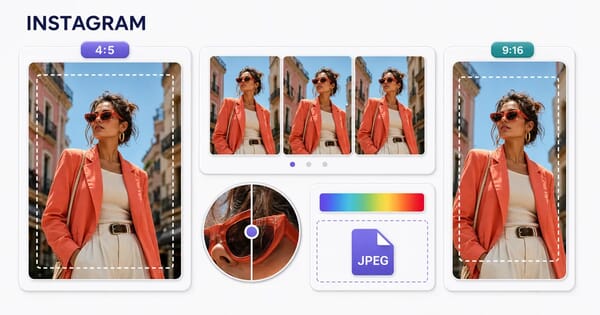
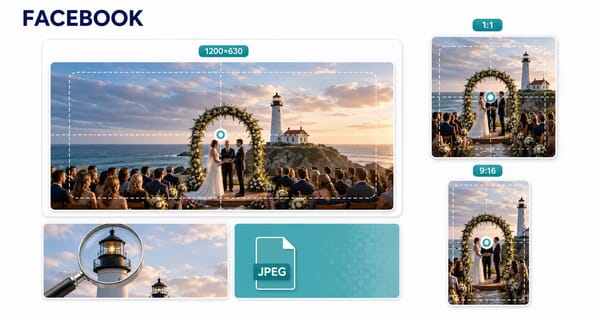
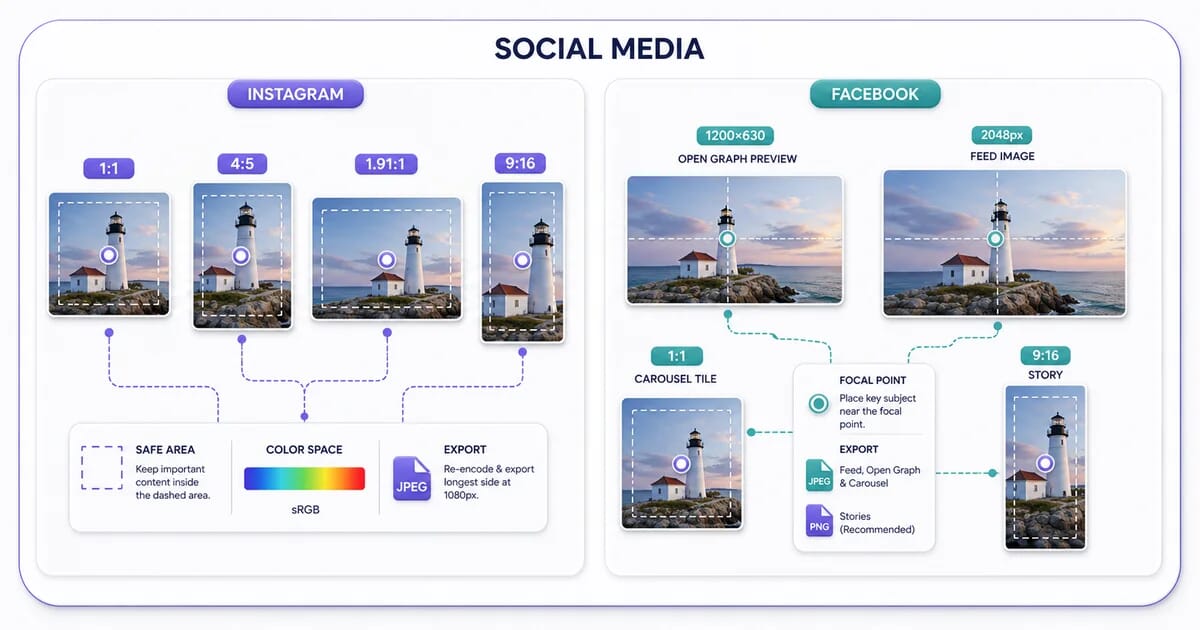
Every network re-encodes your uploads. Instagram and Facebook both run images through their own compressors, and an image that arrives at the wrong size or aspect ratio gets cropped, scaled, or re-compressed a second time — which is where banding, blur, and muddy text come from. The guides below give you the exact dimensions, formats, and export settings each platform actually wants, so the file you upload is the file your audience sees.
Quick Reference: Platform Requirements at a Glance
Rules That Apply to Every Network
Upload bigger than display, not 4× bigger
Export at roughly 1.5–2× the display size. Oversized files get downscaled anyway, and the platform's scaler is worse than yours — plus you hand it a heavier file to re-compress.
Export to sRGB
Both networks assume sRGB. A Display P3 or untagged export shifts colors after re-encoding — saturated reds and greens drift the most.
Keep text off the outer edges
Aspect-ratio mismatches trigger center cropping in feeds and stories. Keep logos and captions inside the middle 80% of the canvas so nothing important gets cut.
Compress before upload, once
A quality 80–85 JPEG or a well-tuned WebP upload survives platform re-encoding far better than a maximum-quality export, because the platform's encoder has less redundant data to chew through.