WebP Image Format: Complete Guide
.webpModern format with excellent compression and quality balance. Files use the .webp extension (image/webp) and run in 96% of browsers.
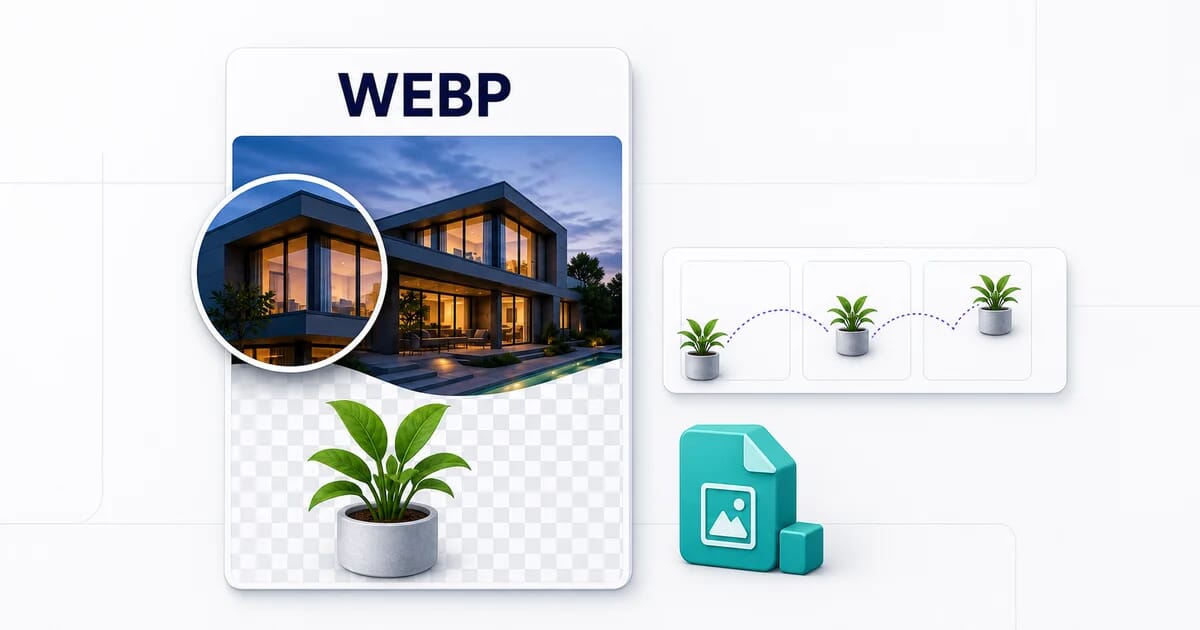
WebP compresses lossily: smaller files, at the cost of detail that cannot be recovered. It supports transparent backgrounds. It can store animations. On size: typically 25-35% smaller than JPEG at the same quality.
📖
→
Master Guide
The Complete WebP Guide: Everything You Need to Know
Advantages
- ✓ Smaller file sizes than JPEG/PNG
- ✓ Supports transparency
- ✓ Supports animation
- ✓ Wide browser support
Limitations
- ✗ Not universal in older software
- ✗ Slightly slower encoding
When to Use WebP
- • Web images
- • E-commerce products
- • Blog images
Technical Details
| File Extension | .webp |
| MIME Type | image/webp |
| Compression | Lossy and lossless |
| Transparency | Yes |
| Animation | Yes |
| Typical size | typically 25-35% smaller than JPEG at the same quality |
| Browser Support | 96% |
WebP FAQ
Is WebP better than JPEG?
Depends on the job. WebP is modern format with excellent compression and quality balance, and typically 25-35% smaller than JPEG at the same quality. JPEG still wins when you need guaranteed support everywhere, such as in email clients or legacy software.
Does WebP support transparent backgrounds?
Yes. WebP stores an alpha channel, so logos, icons, and cut-out graphics keep their transparent areas intact.
How large is a typical WebP file?
typically 25-35% smaller than JPEG at the same quality. Actual size always depends on image content and quality settings — a detailed photograph and a flat two-color logo in the same format can differ by an order of magnitude.